Showing posts with label Tar Sands. Show all posts
Showing posts with label Tar Sands. Show all posts
Tuesday, March 12, 2013
State Dept. report okaying Keystone XL linked to oil industry
The State Department study published last month okaying the Keystone XL pipeline was partly compiled by "oil-industry connected" firms, according to new reports.
The Environmental Impact Statement, as Salon noted on its release, angered environmentalists for its assessment that the project was sound and would have limited negative consequences. As DeSmog Blog's Steve Horn noted Tuesday, however, "Unmentioned by State: the study was contracted out to firms with tar sands extraction clientele, as revealed by InsideClimate News."
InsideClimate News reported that two firms, EnSys Energy and ICF International provided the State Department that basis for their claims:
Continue Reading...
http://www.salon.com/2013/03/12/state_dept_report_okaying_keystone_xl_


Thursday, January 24, 2013
How To Make Gasoline From Tar Sands, In Six Simple Steps

Ever wonder about the future of energy? Will it be wind? Solar? Geothermal? No wait, I got it, tar sands! (Let's try that again - tar sands!) They've got everything oil does, but they're harder to get, crappier when you get them, and leave a much bigger mark on the climate. Sounds like a winner. Let's look a little closer, shall we?



First off, what are tar sands? Tar sands are deposits of about 90 percent sand or sandstone, water, and clay mixed with only about 10 percent high-sulfur bitumen, a viscous black petroleum sludge rich in hydrocarbons, also known as "natural asphalt."

The Athabasca reserves, in Alberta, Canada, estimated to hold about 170 billion barrels, are the site of the only commercial tar-sands operation in the world. (Though, spoiler alert, that's about to change.) It's one of the largest industrial programs on the planet and could eventually cover an area larger than the state of Florida - and it's sprouting an enormous oily ganglion known as the Keystone XL pipeline, which, if completed, would pump 1.1 million barrels ofbitumen sludge a day, crisscrossing much of the continent's freshwater supply, all the way to the Gulf of Mexico.
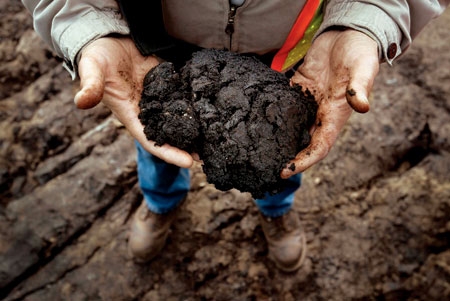
Sound like a complicated way to create oil, gasoline, and diesel? Naw. Ain't no thing. Just follow these simple instructions:
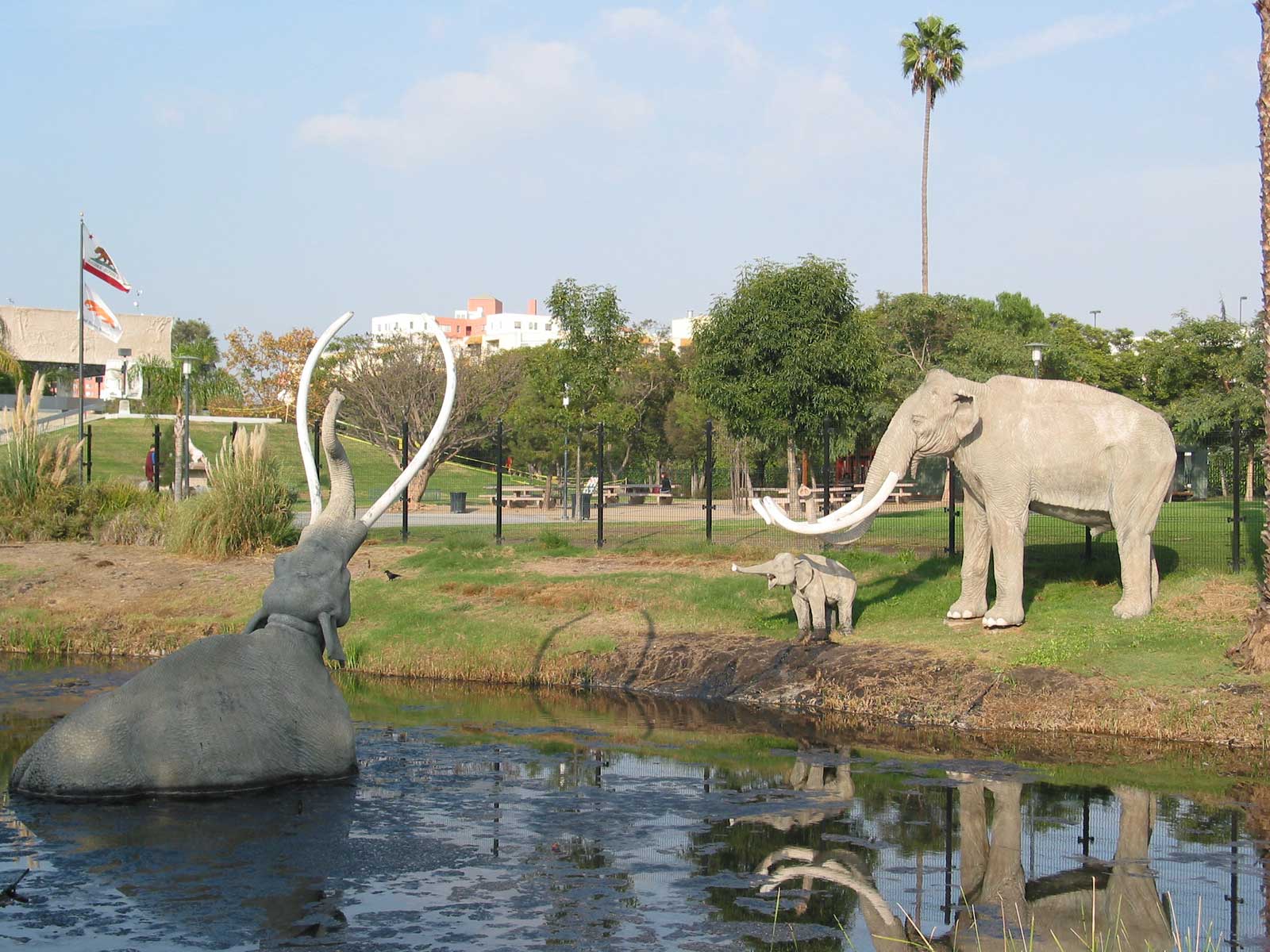
1. Change the name from tar sands to oil sands. Even though there's no actual oil in them, you're already that much closer to that sweet Texas Tea. I mean, tar is the reason we don't have mastodons. Nobody wants tar. But everybody wants oil - we put it in our cars and on our salads!
2. Clear-cut all that unsightly boreal forest. This, admittedly, can be a bit of a bear - or, more likely, lots of bears, and lynxes, and trees, and anything else that creeps, crawls, grows, or flies, and, in the name of tar sands, will also need to die.


4. To extract the bitumen from the sands, you'll need to crush the sands with enormous machines creatively known as crushers. Mix the crushed sands with hot water to form a slurry, then agitate the slurry (interestingly, also a major step in most British cooking) so the bitumen sludge can be scooped out. The stuff is still too thick to transport, though, so you'll need to cut it with solvents so it can be shipped via pipeline for processing.
5. Now you're ready to get started! Of course you've got a problem. Somebody added solvents to our tar, so here comes the hydro-treating that removes the solvents, along with as much nitrogen, sulfur, and other metals as we can get out. The process uses a lot of water and energy in the form of natural gas and oil. (Hey, what are we trying to make again?) Next, heat it again to remove carbon and add hydrogen as part of the upgrading process to make this sludge useful.
6. The bitumen still needs to be refined, so it's off again into another pipeline to an oil refinery, though most of the old refineries aren't up to the task of handling the filthy bitumen, so you'll need to build new refineries or upgrade old ones. Presto! You're cooking with gas!
After all of this, it takes as much as four tons of sand and four barrels of fresh water to make a barrel of synthetic oil, which is good for about 42 gallons of gas, or one fill up in a '97 Suburban. The good news is about 10 percent of that water is recycled! (On the downside, the other 90 percent is dumped into toxic tailing ponds, which currently cover about 50 square kilometers [19 square miles] along the Athabasca River, and is leaking into the ecosystem at a rate of perhaps 11 million liters a day.)

Sounds great, huh? That's probably why the state of Utah has given final approval to open the world's second commercial tar-sands project. The Alberta operation uses more water than a city of a million people each year. Seems like a perfect fit for Utah. I'm sure the 2 million-plus people in the greater Salt Lake City area will switch to (caffeine-free) Pepsi!
Not everyone seems quite as enthused as Utah, however. The E.U. attempted to single out tar sands as "highly polluting," and Simon Hughes, the deputy leader of the British Liberal Dems, compared them to land mines, blood diamonds, and cluster bombs. This side of the pond, James Hansen, head of NASA's Goddard Space Studies Institute, warned that exploiting all of Canada's tar sands would bethe final nail in the climate coffin, and that heading down that road will lead to a global game over.
But what do those guys know? Just follow the steps and making oil out of tar sands is as easy as falling out of bed. And besides, tar sands isn't game over, it's a new beginning.


- Jim Meyer is a Baltimore-based stand-up comedian, actor, retired roller derby announcer, and freelance writer. Follow his exploits here. Reprinted from Grist with permission.
http://thinkprogress.org/climate/2013/01/24/1491051/how-to-make-gasoli
Thursday, December 13, 2012
Documents Reveal Alberta Colludes With Industry In Tar Sands Pipeline Safety Review

A pipeline safety review conducted by the Alberta government last summer was done with the oil and gas industry's interests in mind, according to recent documents released to Greenpeace through Freedom of Information legislation. The documents (PDF) show the review, commissioned after a series of back-to-back pipeline incidents across Alberta raised public concern, was coordinated internally between government and industry, and appears to have required industry consent.
Greenpeace campaigner Keith Stewart told the Canadian Press "there's a difference between talking to industry and asking for their approval."
Private communications suggest government officials worked behind the scenes to develop a review plan that would please industry.
"It looks like industry got to write the terms for this review," said Stewart.
The review was commissioned by the Alberta government after a collective of more than 50 prominent environmental, land rights, First Nations and union representatives called upon Premier Alison Redford to initiate an independent review of the province's pipeline safety. The groups, including the Alberta Surface Rights Group, The Council of Canadians, the Sierra Club and Greenpeace Canada also launched an anonymous oil spill tipline, urging individuals to make rupture and spill information public. The Alberta government does not make such information available on a public database.
Between May and June the pipeline industry suffered three major incidents in Alberta. The first saw 3.5 million liters of oil leaked into muskeg near Rainbow Lake. In June, a tributary of Red Deer River, which provides drinking water to many Albertan communities, was flooded with 475,000 liters of oil from an unused pipeline. Not two weeks later, more than 230,000 liters were spilled from a leaking line near Elk Lake.
In July, Energy Minister Ken Hughes announced a review of the province's pipeline infrastructure safety would be conducted by a third party contracted by the provincial regulator, the Energy Resources Conservation Board (ERCB).
However, documents show high-profile meetings took place with major industry players before the minister's announcement.
Emails show Minister Hughes invited 14 pipeline CEOs, the Canadian Association of Petroleum Producers, Canada's most powerful oil and gas industry lobby group, and the Small Producers and Explorers Association of Canada.
His invitation read: "As you know, the industry operates under world-leading regulatory regime, and has a strong and improving safety record. Some recent incidents and ongoing media attention about energy and environmental issues have given us all the opportunity to reflect not just on how we ensure safety, but also on how we communicate our safety commitment. With this in mind, I would appreciate the opportunity to meet with you."
Industry representatives were given an advanced overview of the review's structure which included pipeline integrity management, water crossing practices and emergency response.
"The meeting was very productive and we are confident we can move this forward," said a top level official, suggesting the review was dependent on industry approval.
"Their overwhelming support for the ERCB as the regulator was good to hear and their advice for you to do a review was also reassuring."
The private dealings between government and industry, as well as the emphasis placed on 'communicating safety,' suggest the pipeline review was done to ensure public appeasement, rather than pipeline integrity, says Stewart.
Stewart suggests the review was meant to align regulations with industry's best practices, rather than inquire into industry 'worst practices' or the effectiveness of ERBC monitoring and enforcement schemes.
No government communications were addressed to the group of landowners and environmental organizations that pushed for the review in the first place.
This is not the first time the ERCB has been caught working to further industry interests. In August 2011, two leaked cabinet briefing notes showed the provincial regulator was collaborating with the gas industry to manage public concerns over fracking and shale gas development.
"Shale gas environmental concerns in the media and in the public in other jurisdictions are potentially problematic for energy development and environmental management in Alberta," the note said.
CAPP approached ERCB to "enhance public communication" surrounding the issue. Critics say such industry/government coordination demonstrates the government's commitment to shaping public opinion on behalf of the industry. Important questions of science, public safety and tough environmental regulation appear to be left at the door.
Energy Minister Hughes defended the Alberta government's closed-door meetings with the pipeline and oil and gas industry, telling the Canadian Press "the first step in that process is to assure me in my role as minister that we are performing at the best possible level." He added, "secondly, once we are assured that that is the case, then there is also strong communication about how we're conducting this business in this province."
"I called the meeting to convey a strong sense of urgency and a strong sense of reflection and investigation," said Hughes.
Carol Linnitt is a writer and researcher focusing on sustainability issues. This piece was originally published at DeSmogBlog and was reprinted with permission.
http://thinkprogress.org/climate/2012/12/13/1326211/documents-reveal-a
Friday, January 15, 2010
Why scream about destruction of Appalachia ("mountain top removal") and not destruction of the Alberta tar sands region
Last week a hue and cry was raised over mountain top removal coal mining in Appalachia. This is such an egregiously bad mining practice that a panel of scientists called for its immediate halt. I mean, what part of "mountain top removal" does not scream in huge bloody letters "DESTRUCTION"??? The goal is to "remove" mountains to get at the coal underneath. Anybody with a half an ounce of awareness would see this.
In Alberta there is a huge deposit of "tar sands" which are being mined and processed to produce liquid oil. The mining process involves destroying whole forests, scraping up the ground, pouring the sands into machines, extracting the oil, and dumping the remaining stuff somewhere.
"Tar sands look like dirt and smell like diesel fuel." This makes them attractive to the oil industry. As I noted in "TechnoSanity #32: Fudged numbers in the IEA's World Energy Outlook, 2009??" it is well understood that oil supplies are running low, and that the world is looking to Canada to fill in the coming gap in production. The 2009 World Energy Outlook made it clear that oil supplies will not keep up with demand, if (when) the economy recovers to produce increased demand, and that the IAEA projects are that to keep up with oil demand in the future will require oil production from places like the Alberta tar sands.
A paper has been published in the Proceedings of the National Academy of Sciences about the egregiously bad mining practices in the Alberta tar sands region. The report covers the high concentrations of various toxic chemical compounds found in the Athabasca River in Alberta as a result of enormous tar sands mining operations.
The question is why in the one case (Appalachia) it warrants calls for immediate cessation and in the other case (Alberta) it doesn't.Currently, the majority of bitumen is recovered by surface-mining practices that require the clearing of large areas of land, resulting in loss of habitat, including migration corridors and breeding grounds for terrestrial and aquatic species. Methods for mitigating and remediating these effects are under development, but even when remediated the habitat will be considerably different from its previous state. These externalities are costs that should be considered when developing this resource....
Global demand for oil and the resulting economic potential mean that development of oil sands will continue. This development has the potential to impact society and the environment significantly. It is essential that any detrimental effects be mitigated as much as possible and that development proceed in a manner that minimizes effects on the health and welfare of the environment, wildlife, and humans like.
The key is "global demand .. will continue" meaning that "development of oil sands will continue". Canada could turn around and say it's not worth the horrid environmental harm to mine these tar sands, and refuse to allow it to happen. But they aren't doing so. The people of the world could realize that use of oil is a very bad thing, and that we should all stop the practice of using machines which require oil. Doing so would halt the demand for oil. But we aren't doing so in any significant numbers.
Dave Levitan writing on the ecopolitology goes a bit further. He took a look at the authors and found that some of them work for the Alberta Water Research Institute. This institute does research activities into, um, water. "But their Management Advisory Board is peppered with a few people who work for giant oil companies like Statoil Hydro and EPCOR. Like pretty much every large oil company in the world, those two have oil sands projects in Alberta."
Um, this is starting to stink of oil companies influencing researchers ... The line of connection is a bit weak. Just because oil companies are funding the institute employing the researchers doesn't mean oil companies are influencing the researchers. Does it?
Whatever the influence on these researchers one thing is clear from what they wrote in their paper. They are allowing the corporate activity of selling oil to meet the continued demand for oil to stop them from calling for a halt to tar sands oil mining. Even if the oil companies didn't influence them to say this, their actions are benefiting the oil companies and thereby allowing the oil companies to continue destroying and polluting the planet.
Subscribe to:
Posts (Atom)